Mastering Type-Safe LLM Agents with Pydantic AI: A Comprehensive Guide
Introduction to Type-Safe LLM Agents
Building reliable LLM-powered applications often requires handling complex outputs, tools, and dependencies. Pydantic AI offers a robust framework for creating type-safe LLM agents that enforce data validation and structured interactions. This guide explores the core concepts that make Pydantic AI a powerful choice for production-ready agents.
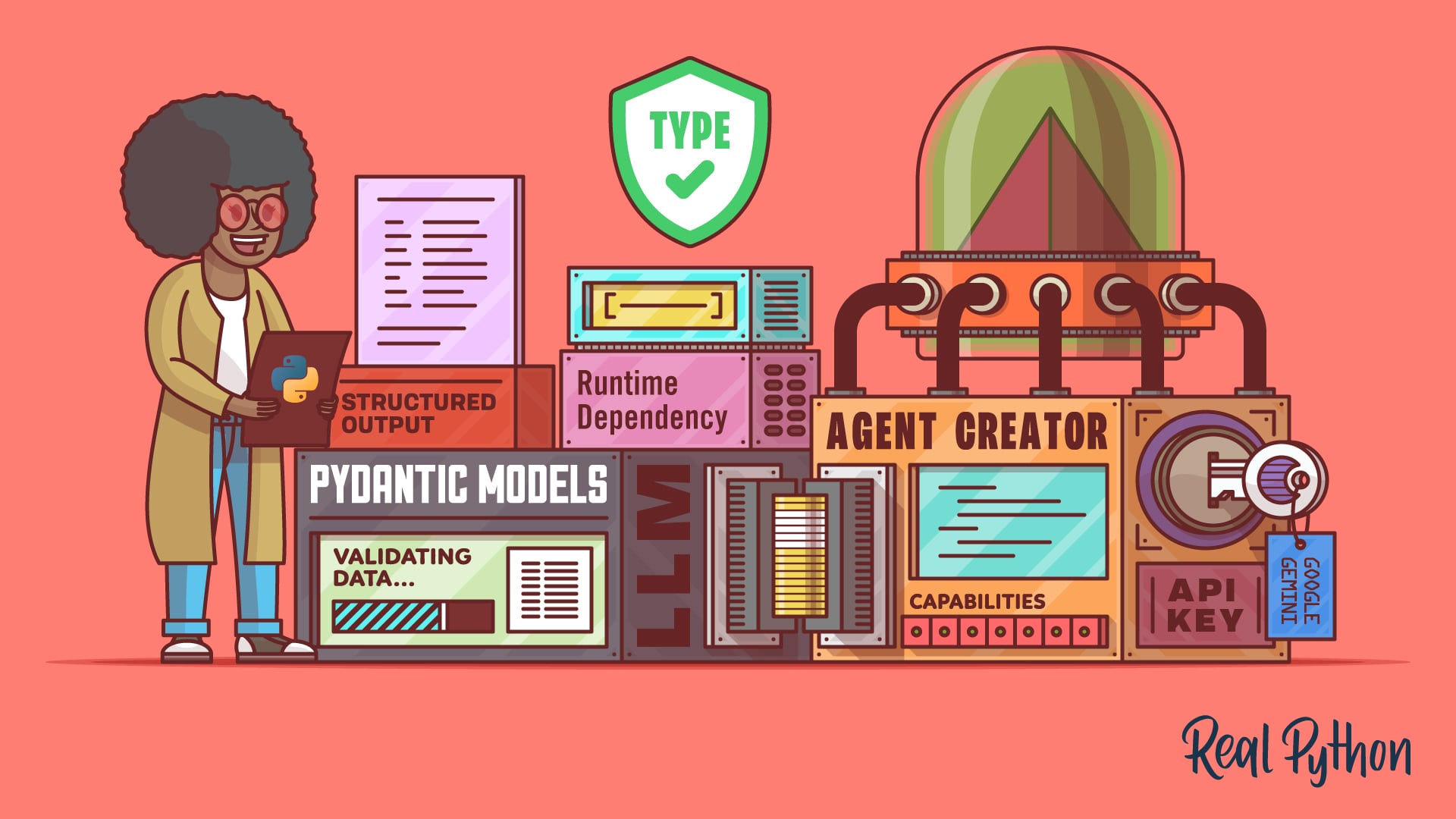
How Pydantic AI Returns Structured Outputs from LLMs
One of the standout features of Pydantic AI is its ability to guarantee that LLM responses match a predefined schema. By defining a Pydantic model as the output type, you ensure the agent returns validated, structured data instead of raw text. This eliminates guesswork and reduces the need for manual parsing.
Internally, Pydantic AI instructs the LLM to return JSON adhering to the model’s schema. It then deserializes and validates the JSON, raising clear errors if fields are missing or types don’t match. This process ensures every response is both type-safe and ready for downstream processing.
Improving Reliability with Validation Retries
LLMs are powerful but not infallible—they may produce malformed or incorrect output. Pydantic AI addresses this through validation retries. If the initial output fails schema validation, the agent automatically sends a corrective prompt back to the LLM, explaining the failure and asking for a fixed response.
You can configure the maximum number of retries (e.g., 3 attempts). Once the LLM delivers a valid response within that limit, the agent proceeds. This mechanism dramatically improves reliability without requiring manual intervention, making it ideal for applications where uptime matters.
Tools and Function Calling in Pydantic AI
Agents often need to interact with external systems—query databases, call APIs, or perform calculations. Pydantic AI supports tools (also called functions) that the LLM can invoke dynamically. Each tool is defined as a Pydantic model, complete with parameters and return types.
When the agent receives a user request, the LLM decides which tools to call and with what arguments. Pydantic AI handles the function dispatch, validates the arguments against the tool’s schema, and passes the result back to the LLM for further reasoning. This cycle enables complex multi-step tasks while keeping the data flow type-safe.
Example: Tool Registration
To use tools, you decorate a Python function with @agent.tool and define its input and output models. Pydantic AI automatically registers the tool’s description and parameter schema, so the LLM knows exactly how to use it. This approach reduces boilerplate and minimizes errors.
Dependency Injection with RunContext
Real-world agents often need access to shared resources—database connections, API clients, or configuration settings. Pydantic AI’s dependency injection system, centered on RunContext, provides a clean way to pass such dependencies to tools and prompts.
When you run an agent, you supply a RunContext object containing all required dependencies. Every tool can access this context via its first parameter, typed as the context class. This decouples tool logic from global state, making your code more testable and modular.
For example, you might define a DatabaseContext with a connection pool. Each tool that needs database access simply receives this context, eliminating the need for global variables or manual initialization.
Trade-Offs When Running Agents in Production
While Pydantic AI simplifies many aspects of agent development, production deployment introduces specific trade-offs to consider:
- Latency: Validation retries and tool calls add extra round trips to the LLM. For latency-sensitive applications, you may need to balance retry counts or use caching strategies.
- Cost: Each retry or tool invocation consumes tokens. Monitoring usage and setting limits is essential to control expenses.
- Error Handling: Even with retries, persistent schema violations can occur. Your application should gracefully degrade—perhaps fall back to a default response or alert a human operator.
- Scalability: Dependency injection via
RunContextworks well for stateless agents. For stateful or long-running sessions, consider using external storage (e.g., Redis) to persist context between agent calls.
By understanding these trade-offs, you can design your agent architecture to maximize both reliability and efficiency.
Bringing It All Together: A Type-Safe Agent Workflow
A typical Pydantic AI agent workflow follows these steps:
- Define your output Pydantic model and any tool models.
- Create an agent class inheriting from
Agent, specifying the output type and available tools. - Configure validation retries and dependency injection via
RunContext. - Run the agent with user input—Pydantic AI handles the LLM interaction, validation, and tool execution automatically.
- Process the final structured output in your application logic.
This pattern ensures that every step—from user query to actionable data—remains type-safe, reliable, and easy to maintain.
Next Steps: Deepen Your Python Skills
Interested in more Python insights? Subscribe to Python Tricks—short, practical tips delivered to your inbox every few days. Each trick sharpens your Python expertise and helps you write cleaner, more efficient code. Click here to learn more and see examples.