Self-Synchronizing Festival Badges: How ESP-NOW Creates a Unified Light Show Without Pairing
Introduction: The Magic of Synchronized Light Shows
At modern music festivals, glowing wristbands and badges that pulse in unison with the beat have become a staple of the experience. These synchronized accessories typically rely on centralized control systems, such as infrared transmitters or Bluetooth pairing with a master device. However, maker Toy Goacher (note: name from original is Tony Goacher, but here corrected) has developed an elegant alternative: the CrowdClock badges. These self-organizing devices use the ESP-NOW wireless protocol to synchronize their LED sequences without any pairing, infrastructure, or designated master—they simply all sync to whichever badge has the highest internal clock tick.
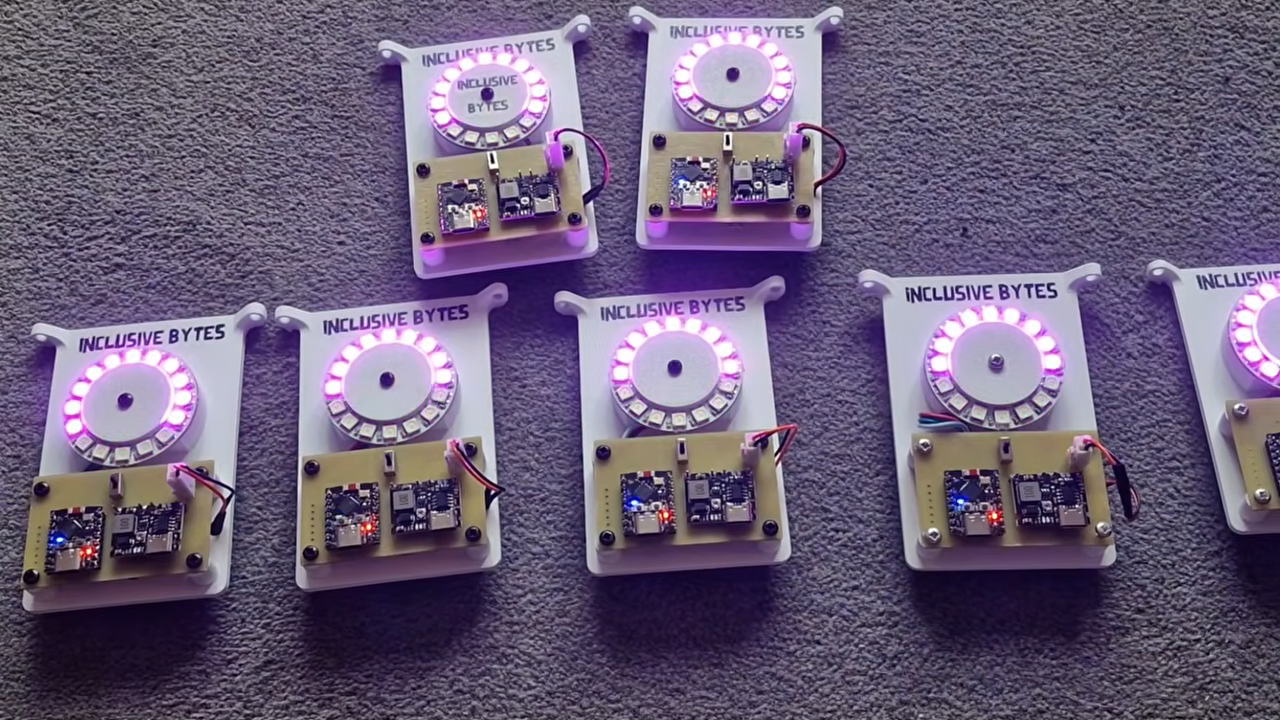
How the CrowdClock Badges Work
Each CrowdClock badge is built around a ESP32 microcontroller—a popular chip known for its built-in Wi-Fi and Bluetooth capabilities. The badge features a ring of 16 addressable RGB LEDs, capable of displaying any color or animated sequence. The key innovation lies in the communication method: instead of using standard Wi-Fi (which requires an access point) or Bluetooth (which requires pairing), the badges use ESP-NOW, a connectionless protocol designed for low‑power, peer‑to‑peer communication between ESP32 devices.
The Role of ESP-NOW
ESP-NOW is Apple's (or Espressif's) lightweight protocol that allows ESP32 devices to send small data packets directly to each other without handshaking. It is ideal for applications where multiple nodes need to exchange brief status updates rapidly. In the CrowdClock design, each badge broadcasts its current local clock tick—a numeric value representing its internal timer—at regular intervals. Simultaneously, every badge listens for clock ticks from other badges within radio range.
Self-Synchronizing Algorithm
The synchronization algorithm is remarkably simple yet effective: when a badge receives a clock tick value that is higher than its own current value, it updates its clock to match the received tick. Over time, because all badges are broadcasting and listening, they converge to the highest clock tick in the network. This means that if one badge starts with a slightly earlier tick (e.g., because it was powered on first), all other badges will quickly adopt that value. The result is that within seconds, every badge in radio range shows the same tick count and therefore runs its LED sequences in perfect sync.
This approach requires no manual synchronization step, no pairing button, and no infrastructure. The badges can be handed out randomly, and as soon as they are turned on and within range of each other, they self‑organize. Even if badges are separated and later brought back together, they re‑sync automatically.
Advantages Over Traditional Synchronization Methods
- No master device needed: Most commercial systems use a dedicated master transmitter (e.g., infrared emitter) that sends timing signals to all wristbands. If the master fails, the entire show stops. CrowdClock’s distributed architecture is resilient to individual node failure.
- No pairing or configuration: Users don’t have to press buttons, open apps, or scan QR codes. The badges start syncing instantly upon power‑up.
- Scalable and flexible: New badges can be added to an existing crowd at any time; they will automatically sync with the highest clock tick.
- Low cost and low complexity: ESP32 modules and WS2812B LEDs are inexpensive, and the firmware is open source (available on GitHub).
This design is also inherently propagating: if the crowd is large, badges outside direct radio range can still receive ticks through intermediate badges acting as relays, creating a mesh‑like effect that helps maintain sync across a large area.

Applications and Future Possibilities
While originally conceived for festival badges, the same self‑synchronizing principle could be applied to many scenarios:
- Community light shows: Neighbors or event attendees could sync their holiday light displays using similar ESP‑NOW badges.
- Interactive installations: Art exhibits where each visitor carries a glowing object that synchronizes with others.
- Educational demonstrations: Teaching distributed algorithms, consensus protocols, or wireless networking in a fun, visual way.
- Emergency signaling: Synchronized flashing beacons for search‑and‑rescue or event safety.
The open‑source nature of CrowdClock files invites tinkerers to modify and extend the design—for example, adding different LED patterns, enabling sound reactivity, or integrating with other sensors.
Conclusion: A Distributed Approach to Festival Magic
Toy Goacher’s self‑synchronizing badges demonstrate that complex synchronization can be achieved without centralized control or expensive infrastructure. By leveraging the ESP-NOW protocol and a simple “adopt the highest tick” algorithm, the badges create a unified, engaging experience that adapts to the crowd. For anyone interested in the hardware or software behind these badges, the full project is documented on GitHub. And if you’ve ever wondered how commercial concert wristbands work, our previous article covers that technology as well. (Video demonstration embedded below.)
This project is a perfect example of how a clever combination of off‑the‑shelf components and a smart algorithm can produce a delightful, low‑cost solution for distributed synchronization.